

Mashed Potatoes with Skin offers a rustic and earthy flavor that sets it apart from the traditional creamy version.
Leaving the skin on not only enhances the texture but also retains the nutritional benefits of the potatoes.
This dish is perfect for fall, embodying the warmth and comfort of the season.
I recall my grandmother making this during our Thanksgiving gatherings, where its unique flavor profile complemented the festive spread.
Whether you’re hosting a holiday feast or a simple family dinner, these mashed potatoes will be a crowd-pleaser.
Get ready for a delightful journey into the world of hearty and flavorful mashed potatoes.
The History and Cultural Significance
• Mashed Potatoes with Skin traces its origins to Ireland in the 18th century, where it was originally created by farmers using all parts of the potato to minimize waste.
• The dish evolved over decades as varieties of potatoes and cooking techniques changed, eventually becoming the beloved version we know today.
• In Irish culture, this dish traditionally appears at family gatherings, symbolizing abundance and togetherness.
• While many variations exist across different regions, the authentic version maintains the nutrient-rich skin that sets it apart from imitations.
Recipe Overview
Nutritional Information (per serving)
Essential Equipment Guide
Potato Masher: This tool is crucial for achieving the perfect texture in mashed potatoes. A masher with a sturdy handle and wide mashing surface ensures even consistency. Alternatives like a fork or ricer can work, but may not offer the same rustic texture.
Large Pot: A pot large enough to accommodate the potatoes and water is essential for even cooking. Look for one with a thick base to prevent scorching. A Dutch oven can serve as a good alternative.
Mixing Bowl: A high-quality mixing bowl is important for combining ingredients after mashing. Stainless steel bowls are preferred for their durability and ease of cleaning. Glass or ceramic bowls can be used if metal is unavailable.
Ingredients
For the Potatoes
|
|
| Amount | Ingredient | Notes |
|---|---|---|
| 6 medium | russet potatoes | thoroughly washed to retain skin |
| 1 teaspoon | salt | for boiling water |
For the Flavor
| Amount | Ingredient | Notes |
|---|---|---|
| 4 tablespoons | butter | room temperature, adds creaminess |
| 1/2 cup | milk | warmed, enhances smoothness |
Seasonings
| Amount | Ingredient | Notes |
|---|---|---|
| 1/2 teaspoon | black pepper | freshly ground for spice |
| 1 tablespoon | fresh chives | finely chopped, for garnish |
| 1 teaspoon | garlic powder | adds depth of flavor |
Preparation Methods
Boiling with Skin: This technique involves cooking the potatoes with their skins on, which helps preserve nutrients and adds texture. Ensure the potatoes are scrubbed clean. Boil until fork-tender for best results.
Mashing Technique: Use a potato masher for a rustic finish. Apply consistent pressure to achieve a uniform texture while retaining some chunks for earthiness.
Flavor Infusion: Warm the milk and butter before adding them to the potatoes. This ensures the mixture blends seamlessly, enhancing creaminess without cooling the potatoes.
Step 1: Prepare Ingredients
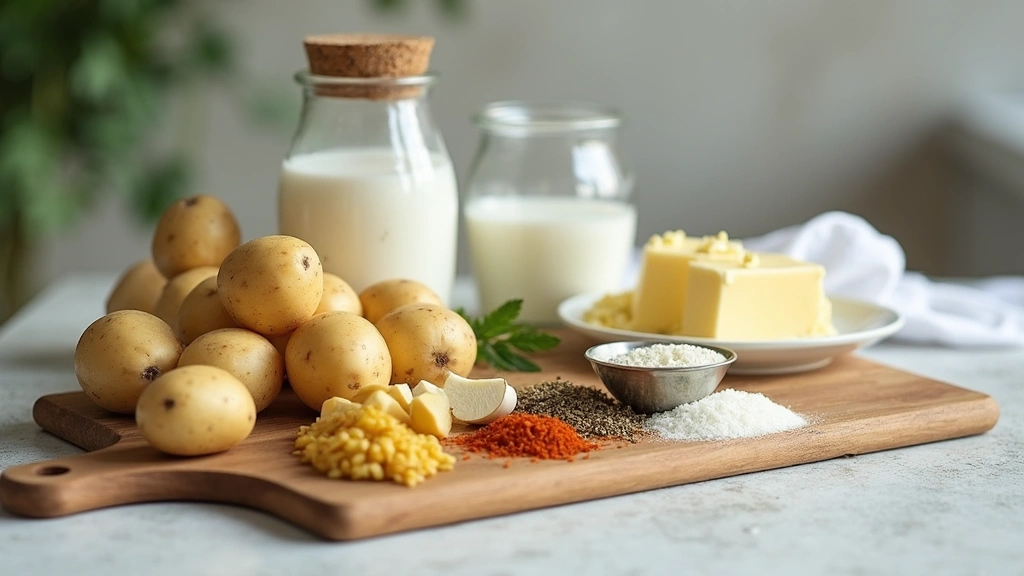
Gather all ingredients and ensure they are measured accurately.
Wash the potatoes thoroughly under running water.
Pat them dry with a clean towel to remove excess moisture.
Peel any spots or blemishes off the potatoes if necessary.
Step 2: Boil Potatoes
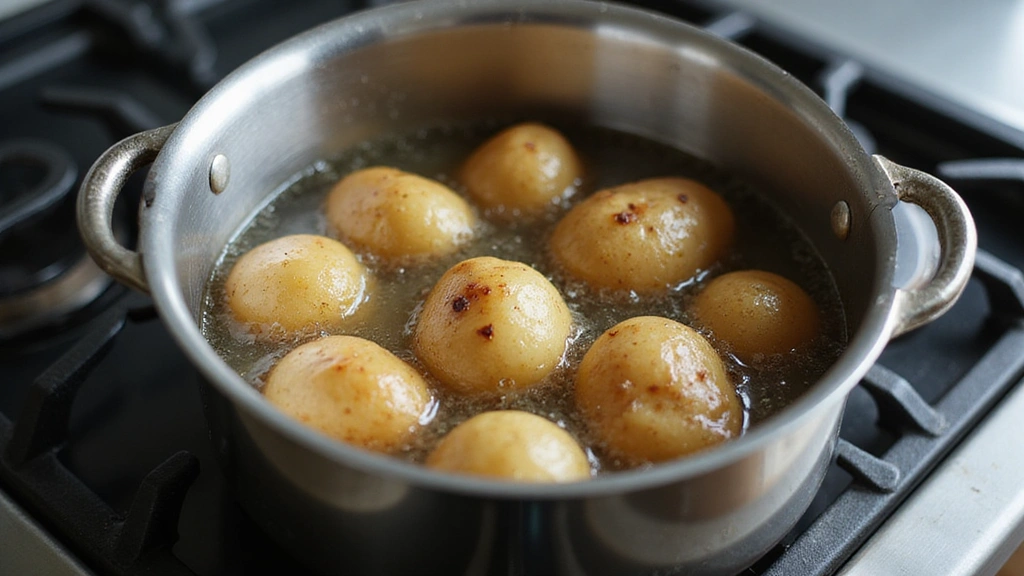
Place the potatoes in a large pot and cover with cold water.
Add salt to the water for seasoning.
Bring the water to a boil over medium-high heat.
Cook until the potatoes are fork-tender, about 15-20 minutes.
Step 3: Drain Potatoes
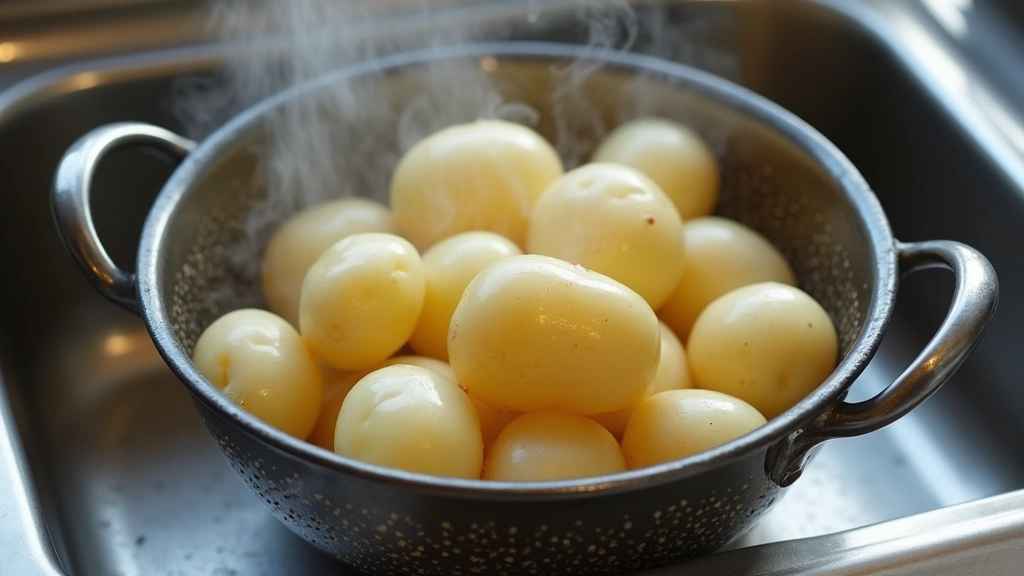
Carefully drain the boiled potatoes using a colander.
Shake off any excess water to prevent soggy potatoes.
Allow the potatoes to sit for a minute to let steam escape.
This step helps in achieving the right texture when mashing.
Step 4: Warm Milk and Butter
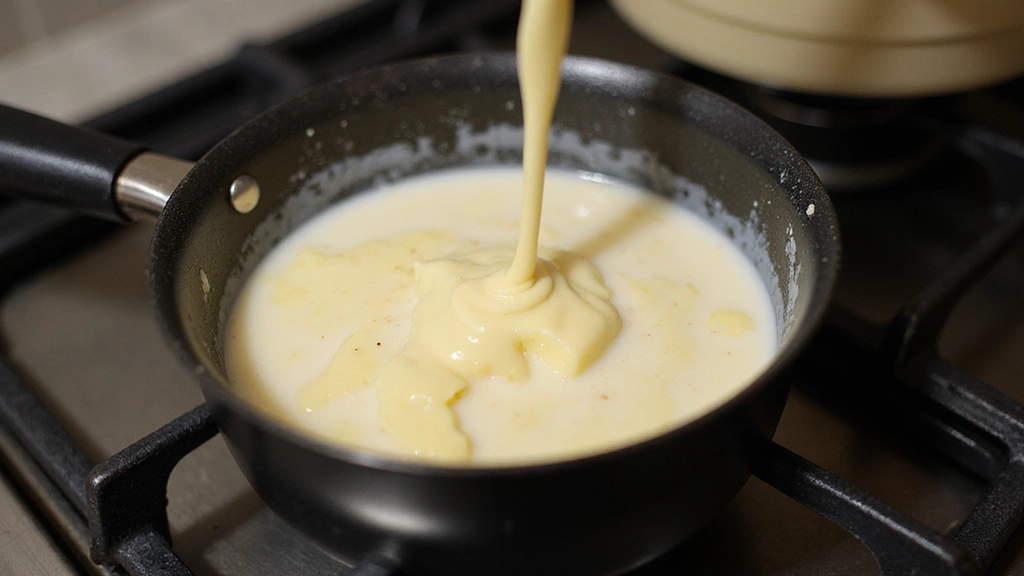
In a small saucepan, combine milk and butter.
Warm over low heat until the butter melts completely.
Stir occasionally to mix the two ingredients well.
Avoid boiling to prevent altering the flavor profile.
Step 5: Mash Potatoes
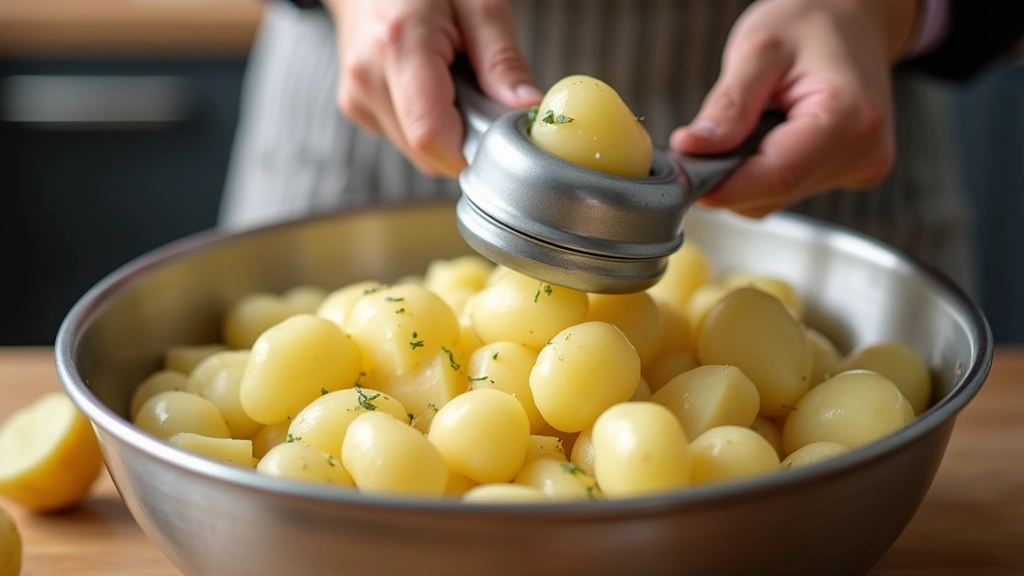
Transfer the drained potatoes to a mixing bowl.
Use a potato masher to break them down into a coarse mash.
Ensure some chunks remain for that rustic texture.
Avoid over-mashing to keep a desirable consistency.
Step 6: Add Milk and Butter
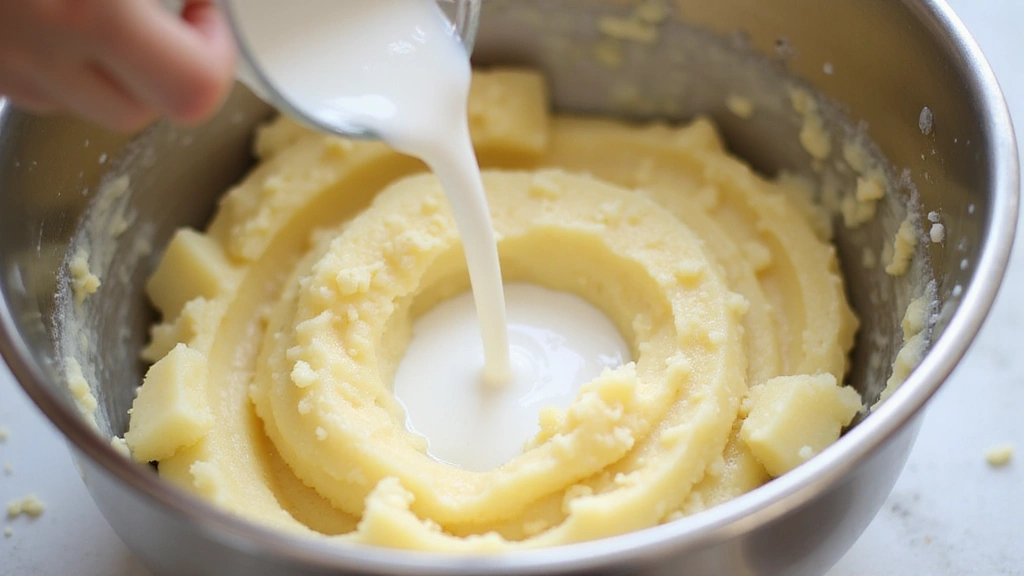
Pour the warmed milk and butter mixture over the mashed potatoes.
Stir gently to incorporate the liquid evenly.
Add garlic powder and black pepper for seasoning.
Ensure the mixture is smooth and cohesive.
Step 7: Adjust Seasoning
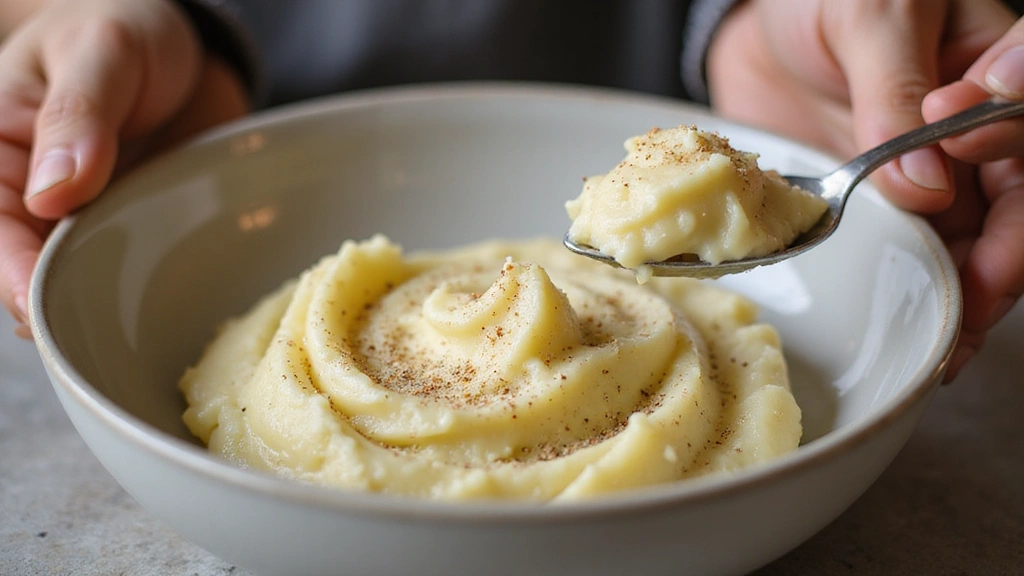
Taste the mashed potatoes to check the seasoning.
Add more salt or pepper if necessary to suit your taste.
Ensure the seasoning is well-balanced throughout.
This ensures a flavorful end product.
Step 8: Serve and Garnish
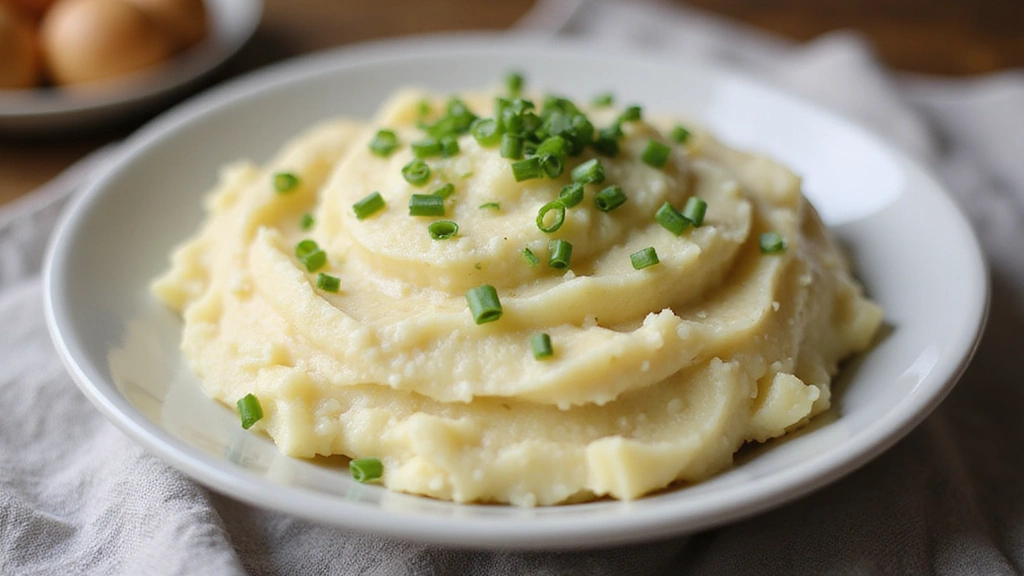
Spoon the mashed potatoes into a serving bowl.
Sprinkle freshly chopped chives on top for garnish.
Serve hot as a side dish or main course.
Enjoy the rustic flavors with your meal.
Critical Timing and Temperature Guide
Boiling Potatoes: Boil the potatoes for 15-20 minutes at medium-high heat until fork-tender. Avoid overcooking, which can lead to watery potatoes.
Warming Milk and Butter: Heat the milk and butter gently until just melted, avoiding boiling to prevent flavor alteration.
Mashing and Mixing: Mash while potatoes are hot to ensure smooth integration of butter and milk. Mixing while cold can result in lumpy texture.
Pro Tips for Mashed Potatoes with Skin
• Ingredient Selection: Choose russet potatoes for their starchy texture, which absorbs flavors well and provides a fluffy result.
• Preparation Secret: Let the potatoes steam dry after draining to remove excess moisture, enhancing the final texture.
• Temperature Management: Ensure milk and butter are warm to help them blend seamlessly with the hot potatoes.
• Texture Enhancement: Use a masher instead of a blender to achieve the desired rustic consistency.
• Flavor Layering: Infuse the milk with a garlic clove while warming for an extra depth of flavor.
• Make-Ahead Strategies: Prepare the potatoes a day in advance, store refrigerated, and reheat gently with added milk for moisture.
• Restaurant-Quality Finishing Touches: Add a dollop of sour cream or cream cheese for extra creaminess before serving.
• Equipment Optimization: Use a heavy-bottomed pot to ensure even cooking without sticking.
Troubleshooting Common Issues
• Texture Too Dense: This can occur if potatoes are overcooked. Ensure they are just fork-tender and let them steam dry before mashing.
• Flavors Unbalanced: If the seasoning is off, adjust salt and pepper gradually, tasting as you go to avoid oversalting.
• Milk Separation: If milk curdles, ensure it is warmed gently and not boiled before adding to potatoes.
• Potatoes Too Watery: Drain thoroughly and allow them to steam dry to remove excess moisture before mashing.
• Lumpy Texture: Ensure potatoes are mashed while hot and use a masher for even consistency.
Variations and Regional Differences
• Irish Colcannon: This version incorporates kale or cabbage, adding a green hue and additional nutrients to the mashed potatoes.
• French Pommes Purée: A smoother and richer version using more butter and cream, often passed through a ricer for a silky texture.
• American Loaded Mashed Potatoes: Includes ingredients like bacon, cheese, and sour cream, offering a heartier and more indulgent dish.
• Indian Aloo Bharta: Features spices like cumin and turmeric, giving the mashed potatoes a spiced and aromatic twist.
Food Science Behind the Recipe
• Starch Gelatinization: When potatoes are cooked, their starch granules swell and absorb water, which contributes to the creamy texture when mashed.
• Emulsion Formation: The blending of milk and butter creates an emulsion that coats the potato starch and enhances creaminess.
• Temperature's Role: Keeping ingredients warm, especially butter and milk, ensures they integrate smoothly, preventing the fats from solidifying and causing lumps.
Frequently Asked Questions
What's the most common mistake people make when preparing Mashed Potatoes with Skin? Overcooking the potatoes can lead to a watery texture. Ensure they are just fork-tender.
Can I use a different type of potato? Yes, but russets are recommended for their starch content, which creates a fluffier texture.
How do I prevent the potatoes from becoming gluey? Avoid over-mixing and use a masher instead of a blender to retain the desired texture.
Can I make this recipe vegan? Substitute butter with vegan margarine and milk with plant-based alternatives like almond or oat milk.
How can I store leftovers? Keep them in an airtight container in the refrigerator for up to three days. Reheat gently with a splash of milk.
Is it necessary to add garlic powder? Garlic powder adds depth but is optional. Adjust to your taste preferences.
Why is it important to warm the milk and butter? Warming these ingredients helps them integrate smoothly into the hot potatoes, enhancing texture and flavor.
Serving and Presentation Guide
• Traditional Presentation: Serve in a rustic bowl with a sprinkle of chives and a pat of melting butter on top.
• Family Style: Present in a large serving dish, allowing guests to help themselves, creating a communal dining experience.
• Individual Servings: Use small ramekins for individual portions, garnished with herbs for an elegant touch.
• Gourmet Plating: Pipe the mashed potatoes onto the plate with a pastry bag for a refined presentation.
Conclusion
Mashed Potatoes with Skin is a delightful twist on a classic dish, offering a rustic and earthy flavor profile.
By following these detailed steps and expert tips, you can create a dish that is both comforting and impressive.
Embrace the flavors and textures that make this recipe unique, and enjoy sharing it with family and friends.